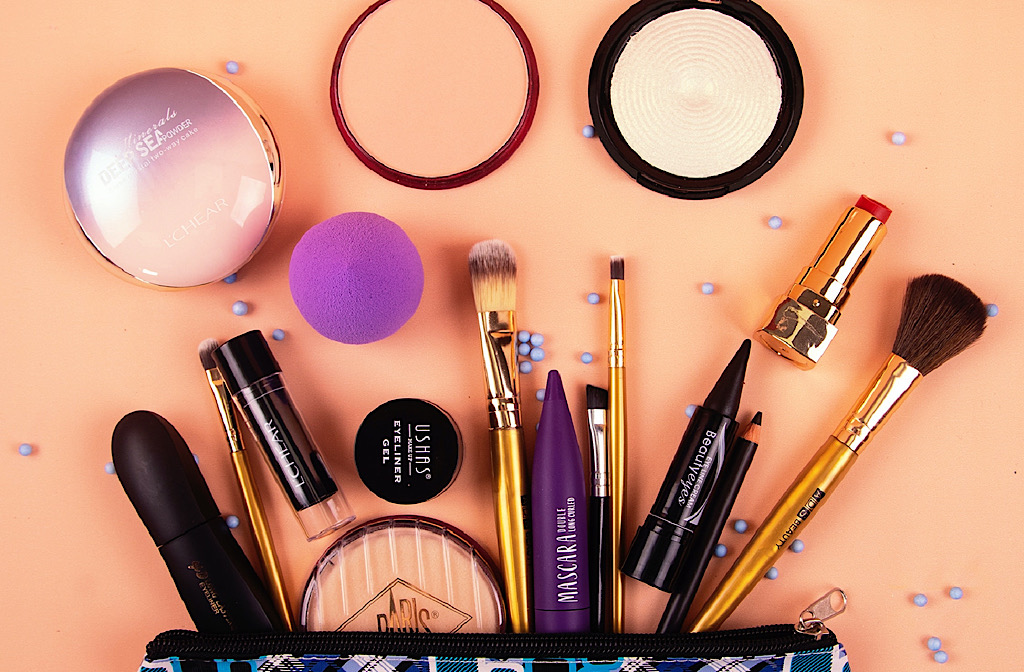
Cosmetics, like clothing, are not gendered, they’re not ‘just for girls’
BY FAY BARRETT, IMAGE BY JHONG PASCUA VIA PEXELS
TRIGGER WARNING: this piece contains mentions of self-harming and deep depression.
Good question.
It’s one I’ve struggled with.
But I think I have the answer.
Before I explain that, let’s delve a little deeper into my relationship with cosmetics over the years.
I was pretty late to the make-up game. At 13/14, when my girl friends were experimenting with eyeshadow and lipstick, I was playing Warhammer. Getting ‘glammed up’ and feminising to the max was not on my radar. (See The Secret Diary Of My Gender Identity for more info). Neither was dating boys, which was probably a large factor behind the girls I knew wearing too much foundation. 90s teenagers: who could forget the orange face, not blended in at the edges, look?
Not to say attracting boys was the only reason they wore it. Make-up is a right of passage for many young women, it’s a way of expressing yourself, of taking those first steps into adulthood, and can make you feel amazing.
I was not interested in any of that.
Until I hit 17.
I’d been horrifically bullied, throughout my teens ,over my academic achievements, my creative talents and the way I looked. To be clear, there was nothing wrong with the way I looked. I was a proud geek as opposed to an overly made up member of the mean girls cool gang.
But the merciless bullying I received triggered a depression and body dysmorphia that nearly destroyed me. I couldn’t look in mirrors (see The Secret Diary Of My Gender Identity). I’d squint through half closed eyes whenever I had to look at my myself. Sometimes I still do this subconsciously today, it’s a habit I can’t quite shake.
I hated the way I looked. I’d been brainwashed by the bullying so much that it left with an unshakeable self loathing that lasted for years. I wanted to rub myself out and start again. When I looked in mirrors, the version of me I saw was totally distorted. I didn’t see what family and friends saw. I know now it was body dysmorphia but failed to call it that, at the time, because I thought that word only belonged to anorexia.
I didn’t have a problem with my physique but, when I looked at my face I saw something ugly and repulsive. It led to self-harming and a very dark hole I nearly didn’t climb out of. I either wanted to rub myself out totally, or rub myself out and start again.
Through changing schools, and embracing make-up, I did the latter. I repainted the version of myself I wanted to see. I femmed up to the max. I’d go to school with a full face of make-up, as if I was off on a night out. At break times I’d hide in the toilet cubicles to reapply it, too ashamed and anxiety riddled for other people to see me putting it on. I wanted to create the illusion I was flawless. That I naturally looked that good. If no one saw me applying make-up, maybe they’ed believe I always looked that way. Which was highly unlikely given my obsession with dark mulberry lips (this was the 90s remember).
The mask I wore worked. For a time. It allowed me to create an illusion and hide. I felt confident and beautiful. I attracted boys. I reinvented myself from the frumpy, geek I’d been made to feel I was. In their place was an overly made up version of femininity. It served me for many years, until it didn’t.
I was hiding the inner me. Perhaps I was protecting the real me, the trans me, from the world by layering on the slap? No-one would question my gender identity if I was the perfect version of woman hood. Perhaps it was that?
The thing is, I did enjoy it. For a time. Correction: I enjoyed the attention. The way men’s admiring looks would validate me. Those tiny dopamine hits of “you’re a valid human being because you’re HOT”, kept me alive. I’d gone full circle on being told I was ugly, to being accepted as one of the beautiful ones. Even some of the boys who’d bullied me, were now hitting on me.
Later, I tried to carve a career as an actress. The make-up and the femininity served that narrative. But they didn’t serve the wounded trans soul who was drowning inside.
I thought I could burying them in layers of cosmetics and mini dresses. I was wrong.
I came out as gay in 2016 and my styling instinctively changed. It was a subtle roll back, over several years, to get to the person I am now. Whereas all the years of heavy make-up had been a covering up process, this one was a peeling back, revealing the person who was always there, the person who should never have been obliterated.
I still wear make-up today, but less of it. These days I stick with foundation, powder, mascara, eye-brow pencil and (occasionally) eye-liner.
To be clear, I don’t wear it to look feminine, although I know it contributes to my ‘soft butch’ aesthetic. I wear it for the other reason I always have: to look good, to be the best version of myself I possibly can, to feel good in my skin.
Not everyone feels that way. You don’t need to wear make-up unless you want to. If it’s not for you, it’s not for you. Part of the reason I do it is because I always have. It was a ritual for so much of my life, it’s hard to un-learn. It’s probably also a hangover from the merciless dysmorphia. I don’t think that scar ever fully leaves you. Once you’re marked, you’re marked for life.
But it’s also because I like to look good to women. I like to look and feel attractive and there’s nothing wrong with that.
Sometimes I don’t wear it though, and I’m increasingly able to appreciate and love the little face that’s been hidden for so long.
I’ve even used it to look more masculine. I colour in my eyebrows, making them appear fuller, the way men’s eyebrows are. A woman I dated, several months ago, helped me contour to achieve a more male look. I felt incredible. It was like Ru Paul’s Drag Race in reverse!
The thing I’ve come to realise t is that make-up, like clothing, is not gendered. It’s not ‘just for girls’. Anyone who wants to can use it. You can even get men’s cosmetics now.
Ultimately, we all like to look and feel good. If make-up is part of that ritual, whatever your sexuality or gender identity, then great. If it’s not, then also great. You do you. We don’t need to live by other people’s definitions of what we should be or look like.
 Breaking Binaries
Leave a comment